
Following is a reflection from then Pope Benedict on the Gospel for the Annunciation! Let us listen attentively to the voice of God, the whisper of God, during this Holy Week even as Mary listened at the Annunciation.
I greet you with deep affection and I would like to share a few simple thoughts with you, suggested by the Gospel for the Annunciation.
 First of all, we are always struck by and made to reflect on the fact that this moment crucial to humanity’s destiny, the moment in which God was made man, is shrouded in deep silence. The encounter between the divine messenger and the Immaculate Virgin takes place completely unnoticed; nobody knows and nobody talks about it. It is an event which, were it to happen in our time, would leave no trace in the newspapers and magazines, because it is a mystery that happens in silence. What is truly great often goes unnoticed and peaceful silence proves more fruitful than the frenetic restlessness characteristic of our cities... the pressure that makes us unable to stop, to be calm, to listen to the silence in which the Lord enables us to hear his discreet voice.
Mary, on the day she received the announcement of the Angel, was in deep recollection and at the same time open to listening to God. In her there was no obstacle, no screen, nothing that separated her from God. This is the meaning of her being without original sin: her relation with God was free from even the slightest flaw; there is no separation, there is not a shadow of selfishness, but perfect harmony; her small human heart is perfectly “centered” in the great heart of God. So it is, dear brothers and sisters, that God’s voice is not recognized in noise and bustle; his plan for our personal and social life is not perceived by remaining on the surface but rather by descending to a deeper level, where the active power is not economic or political but moral and spiritual. There Mary invites us to come down and to put ourselves in tune with God’s action.
There is something else, something even more important which Mary Immaculate tells us when we come here, and it is that the world’s salvation is not the work of human beings — but it comes from Grace. What does this word mean? Grace means Love in its purity and beauty, it is God himself as he revealed himself in salvation history, recounted in the Bible and in its fulfillment in Jesus Christ. Mary is called “full of grace” (Lk 1:28) and with her specific identity she reminds us of God’s primacy in our life and in the history of the world, she reminds us that the power of God’s love is stronger than evil … Mary tells us that however low man may fall it is never too low for God, who descended even into hell; however far astray our heart may have gone, God is always “greater” (1 Jn 3:20). The gentle breath of Grace can dispel the darkest cloud and can make life beautiful and rich in meaning even in the most inhuman situations.
And from this derives the third thing that Mary tells us. She speaks of joy, that authentic joy which spreads in hearts freed from sin. Grace brings true joy that does not depend on possessions but is rooted in the innermost self, in the depths of the person, and nothing and no one can remove it…
Mary’s joy is complete, for in her heart there is not a shadow of sin. This joy coincides with the presence of Jesus in her life: Jesus conceived and carried in her womb, then as a child entrusted to her motherly care, as an adolescent, a young man and an adult; Jesus seen leaving home, followed at a distance with faith even to the Cross and to the Resurrection; Jesus is Mary’s joy and is the joy of the Church, the joy of us all.
Mary teaches us to listen to the voice of God who speaks in silence; to welcome his Grace that sets us free from sin and from all selfishness in order thereby to taste true joy. Mary, full of grace, pray for us!

 Today, March 22nd, Francis has made it exceedingly clear that he has no intention whatsoever of deviating from the fundamentals of Pope Benedict’s assessment of secular culture.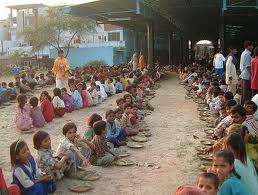
 A quick word on St. Joseph’s Day! What struck me about Pope Francis’ installation homily was his reference to tenderness. He said we should not be afraid of tenderness, of goodness. This, along with his challenge that we should protect all life and all creation even as St. Joseph protected Jesus and Mary, were the most salient points that I took from his homily.

 I got this awesome post from the father-in-law of my brother. I do not often re-blog things, but what a beautiful thing! I am all for informal rosaries that celebrate some other aspect of the mysteries of life and of the Church just so long as concentrating on these informal prayers doesn’t obscure our focus on the 2o official mysteries. And most assuredly that was not the case in this instance as this was the familie’s second Rosary of the day.
 The option for the poor is much more than a simple social teaching. It is not about standard of living, economic development, or soup kitchens as much as it is about the spirituality of what it means to be a Christian. Serving the poor should make every human aware of their own miserable poverty before God. In short, the fundamental relationship between humanity and God is one of extreme poverty as opposed to extreme wealth. God has everything, he is wealthy, not just in terms of material reality, but in terms, first and foremost, of spiritual reality. Spiritual wealth makes us much more wealthy and happy than material wealth could ever make us. Furthermore, to say we need a Church “that is poor and for the poor,” as Francis has said, is not so much about divesting ourselves of material wealth as much as it is about divesting ourselves of ideas of our identity that exalt the self at the expense of God.




