
A thought came to me during a long conversation with my wife on Holy Saturday night/Easter morning. It occurred to me that humility is three-fold just as the Theological Virtues are three-fold. A reflection on faith, hope, and love can enrich our understanding of humility and our understanding of humility can be enriched by a reflection on the Divine Virtues.
First, the spiritual experience that precedes the others is the experience of faith. Love crowns the spiritual life and is thus most important within it, but faith is that virtue that inspires and precedes the other virtues. First, we must believe in Christ and in his teachings in order to have hope that we will be in Heaven with him eventually, and finally to love him with the love that he gives to us.
What is the humility of faith? Why is this humility different than the humility of hope and that of love? The humility of faith, if we unify the experience of believing in God with the fundamentals of the spiritual life, includes a realization of our misery before God.  Realizing our misery is not the object of faith as the object of this Divine Virtue can only be something Divine (i.e. Christ, the Truth). However, the realization of our misery follows directly upon our recognition of Christ and our belief in him and his teachings. And vice versa: realizing our misery can help us to reach out to Christ in faith. We see this experience over and over again in the Scriptures. Again and again Christ heals the sick, those who are steeped in their own misery and who thus recognize the Other, the Truth, as that which can heal them, as that which can make them whole. Believing in God means that we have recognized our own misery in the humility of faith. Furthermore, the stronger our faith becomes the more completely we are able to recognize our poverty before God. Indeed it is by these means that we can be set free; “The Truth will set you free!” (John 8:32).
One might argue that Faith has nothing to do with our realization of misery, but rather with believing in God, his Son, and the teachings of the Church. Certainly, all of this is fundamental and essential to an experience of faith. But the experience of faith is in its fullest reality an experience of Christ, and of God, as truth. God is Truth (not that he isn’t Love as well). Faith is an adherence to the truth of God in a radical way through belief. Faith is a movement of our intellect that can only be achieved by a grace given to us through Baptism. Furthermore, the experience of faith, most importantly, is an encounter with the person of Jesus Christ, the Son of God. When we encounter Jesus by believing in him we are immediately forced to confront untruth within us. By believing in Christ we divest ourselves of our prideful identity which tends to place the self in the center. Instead, in recognizing Christ as our personal Lord and Savior we are immediately challenged to make him the center of our life. In making the Truth the center of our life we are forced to realize the extent of our selfishness, the extent to which we do not conform to him.
The humility of faith, most importantly, is an encounter with the person of Jesus Christ. If this encounter is genuine it helps us to incrementally realize our very great misery before God. Further, this realization must be done in such a way that recognizes Christ as the Truth and as the answer to our weakness. If we debase (meaning to make less) our selfishness without placing Christ in the center of our lives then this debasement cannot truly be an experience of Christ, but rather a continuation of pride through despair.
An essential aspect of faith then is a consistent desire to conform ourselves to Truth, and faith does not truly have Christ as its object if it does not affect this desire within us. The more genuine our faith is the more courageous we are in rooting out evil within us, and in recognizing it for what it is. But the experience of faith, while it is united with hope and love, is primarily an intellectual experience. When the saints proclaim their very great misery before God they are speaking out of an experience of faith, but not of faith alone. They are also speaking out of an experience of hope and of love.
My next Spiritual Minute will be about the humility of hope, and then later we will talk about the humility of love. The distinctions between the different humilities may not be very clear yet. This is on account of the fact that the experience of faith is unified with the experience of the other virtues; it is distinguishable but not separable. Once we define the other humilities we will see more clearly how the experience of faith-humility is different than the others. Bear with me, and I hope this may be of use to you in your journey and in mine.
Thank you for reading.
ADDENDUM
Speaking about these complex Theological issues isn’t easy. I wanted to make clear that I do see Charity as the beginning and the summit of the spiritual life. Faith precedes hope and love only according to the order of generation, as the Angelic Doctor has said. This means that faith precedes love because before we can love a thing we must first perceive its good with our intellect. However, love also precedes faith in a different way as St. Thomas says, according to the order of perfection. Faith is not possible without charity as the intellect in believing is commanded by the will that loves God. The first quotation below is the Catechism (155) quoting St. Thomas and the second is from the Summa on “Whether Faith Precedes Hope and Hope Charity?”
“Believing is an act of the intellect assenting to the divine truth by command of the will moved by God through grace.”
“I answer that, Order is twofold: order of generation, and order of perfection. By order of generation, in respect of which matter precedes form, and the imperfect precedes the perfect, in one same subject faith precedes hope, and hope charity, as to their acts: because habits are all infused together. For the movement of the appetite cannot tend to anything, either by hoping or loving, unless that thing be apprehended by the sense or by the intellect. Now it is by faith that the intellect apprehends the object of hope and love. Hence in the order of generation, faith precedes hope and charity. In like manner a man loves a thing because he apprehends it as his good. Now from the very fact that a man hopes to be able to obtain some good through someone, he looks on the man in whom he hopes as a good of his own. Hence for the very reason that a man hopes in someone, he proceeds to love him: so that in the order of generation, hope precedes charity as regards their respective acts.
But in the order of perfection, charity precedes faith and hope: because both faith and hope are quickened by charity, and receive from charity their full complement as virtues. For thus charity is the mother and the root of all the virtues, inasmuch as it is the form of them all, as we shall state further on (II-II, 23, 8).
This suffices for the Reply to the First Objection.”
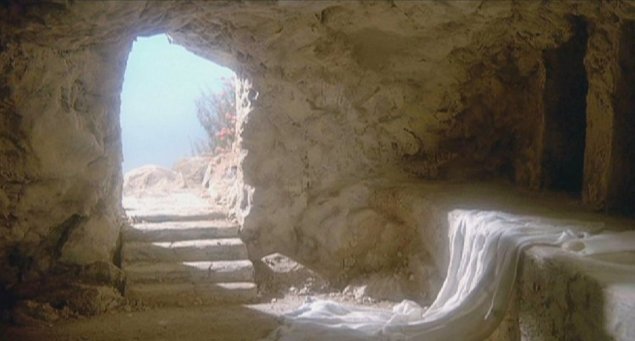
 Between 12 and 3 on Good Friday I try to keep silence and pray or read some spiritual things as is the common custom. That is what I have been doing. I took my three year old son on a ride hoping he would fall asleep, and thus was blessed by listening to a radio broadcast of the Good Friday service at St. Peter’s on Guadalupe Radio. It was very beautiful especially excerpts of Father Cantalamessa’s homily and the singing. Before listening to all of this I walked down to get into the car with my son. I was holding his hand helping him down the steps from our upstairs apartment. I felt God speak to me “I had a Son like this once.” I was filled with joy and thought of what God did for us in giving his only begotten Son on this very day. I then reflected on how God literally had a son like mine, when Christ was here on earth, when he was a baby, a little boy. I suppose Christ is always a little boy, always a young man, and always a man of courage dying on the Cross and being resurrected three days later as his human life echoes in an eternity of Divine Love.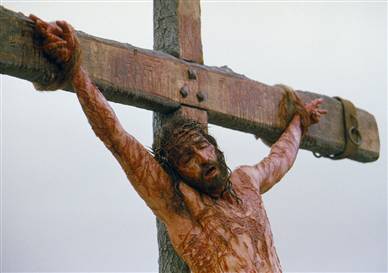


 What is the most defining characteristic of the Divine Life, the mutual love of the Father, Son, and Holy Ghost? I think the obvious answer is gift. Giving and receiving of the Divine Persons is Love, and first and foremost, God is Love.




